Retail Is Becoming an Experience
Retail is undergoing a major transformation. As ecommerce continues to dominate everyday purchases, physical retail spaces are evolving from simple points of sale into destinations for experiences.
This shift is often referred to as experiential retail, a strategy where brands create immersive environments that encourage customers to interact with products rather than simply browse shelves.
Interactive product demos, pop-up installations, brand storytelling, and social media moments are now central elements of modern retail design. Instead of focusing purely on transactions, brands are investing in environments that build emotional connections and memorable experiences for customers.
Why Experiential Retail Is Growing
Industry observers note that experiential retail has become a key strategy for bringing customers back into physical spaces. After years of growth in online shopping, many brands are using immersive experiences to increase foot traffic and encourage longer visits inside retail environments.
This approach recognizes an important shift in consumer behavior. Many shoppers today visit stores not just to buy products, but to explore, interact, and discover new brands.
Experiential retail environments often include:
Interactive product demonstrations
Immersive design or installations
Live events or brand programming
Spaces designed for social media sharing
These elements transform shopping into something closer to entertainment or discovery.
The Limitations of Traditional Storefront Retail
While experiential retail is growing, traditional storefronts come with significant limitations.
Opening a physical store requires long-term leases, high construction costs, and fixed locations that may not align with where customers actually spend their time.
For emerging brands or product launches, these investments can be difficult to justify.
As a result, many companies are exploring more flexible retail formats that allow them to create immersive experiences without committing to permanent locations.
The Rise of Mobile Experiential Retail
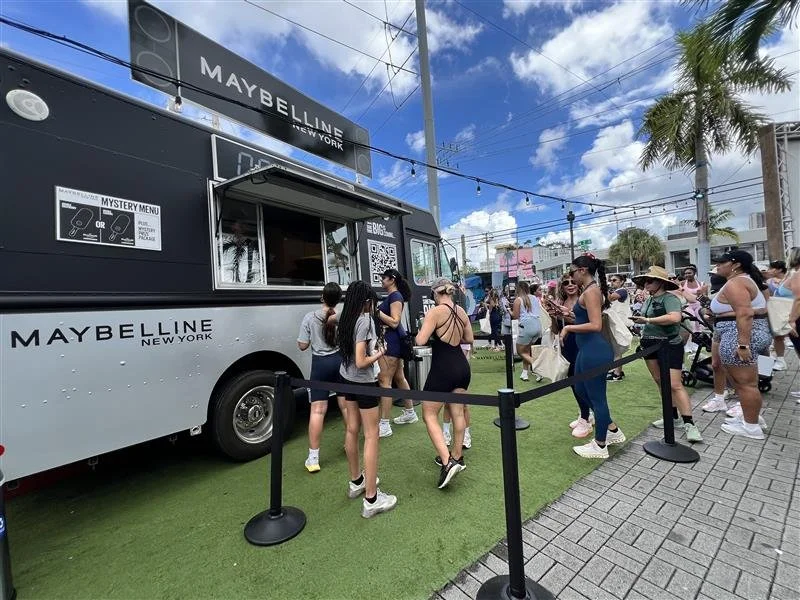
One of the most innovative responses to this challenge is mobile experiential retail.
Instead of building a permanent store, brands can create fully immersive retail environments inside custom vehicles or mobile installations that travel between markets and events.
This model combines the benefits of experiential retail with the flexibility of mobile marketing.
For example, glass box trucks and mobile retail vehicles allow brands to showcase products in highly visible environments while still offering hands-on demonstrations and direct sales opportunities.
These mobile environments can function as:
Traveling product showrooms
Interactive demo spaces
Pop-up retail stores
Sampling activations
Social media moments
Because they move between cities, events, and cultural moments, mobile retail experiences can reach far more audiences than a single storefront.
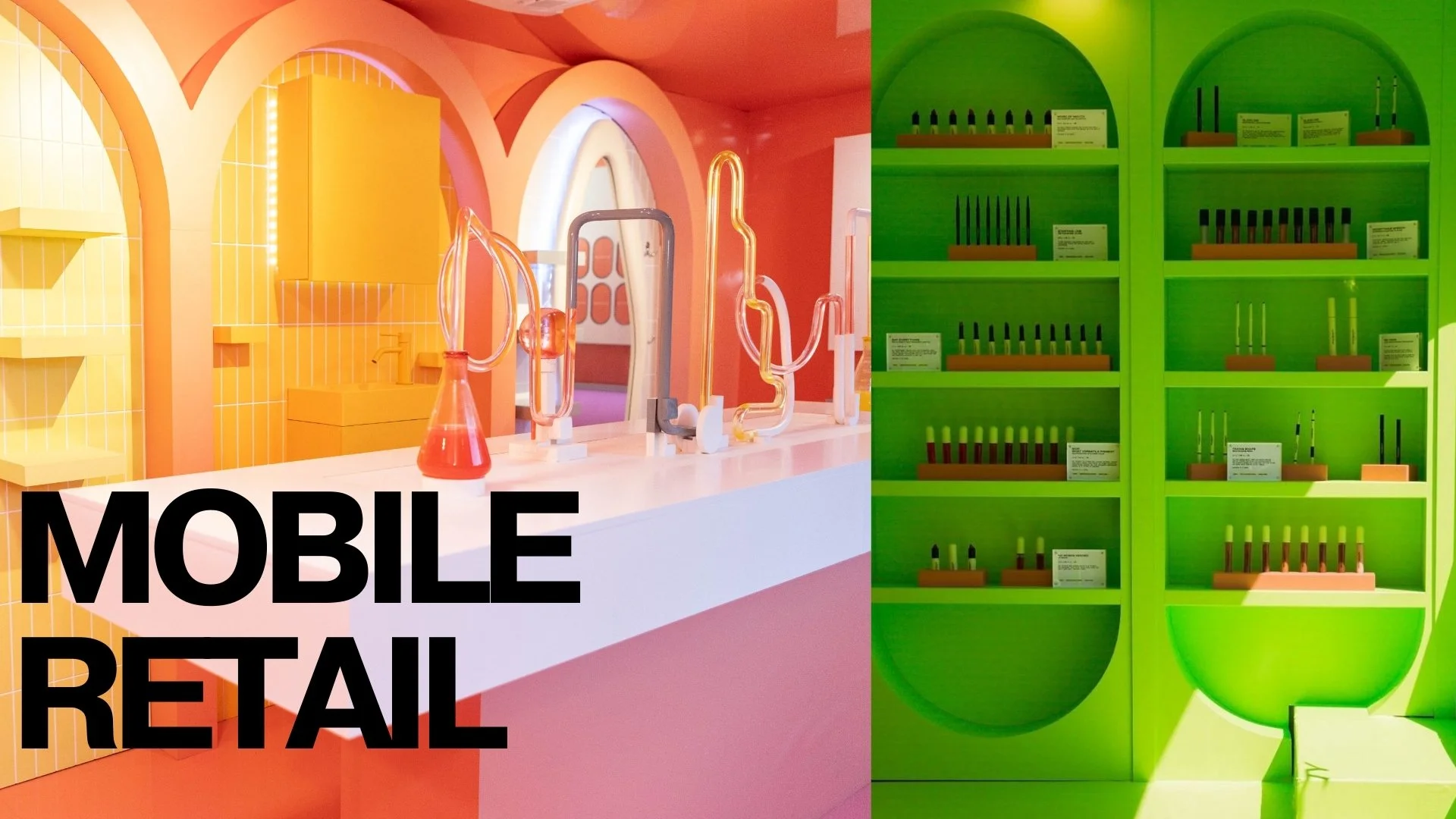
Mobile retail by VTI Studios
Experiential Retail That Travels
Mobile experiential retail allows brands to bring their retail environment directly to where people gather.
Music festivals, sporting events, city centers, college campuses, and major cultural gatherings all provide opportunities for brands to introduce interactive retail experiences to new audiences.
A glass box walk-on truck, for example, creates a retail environment that is both visually striking and fully interactive. Customers can step inside, explore products, watch demonstrations, and purchase items on-site.
This approach offers many advantages compared to traditional retail.
It is more flexible, more creative, and often significantly more cost-efficient than building a permanent store.
Most importantly, it allows brands to create memorable experiences in the places where audiences are already spending their time.
The Future of Retail Is Experiential
As brands continue to rethink the role of physical retail, experiential environments are becoming a central part of marketing strategy.
Retail spaces are evolving into places where customers discover products, interact with brands, and participate in memorable experiences that extend beyond the store itself.
For many brands, the most exciting opportunity lies in combining experiential retail with mobility. When retail experiences can travel, they become far more dynamic, scalable, and culturally relevant.
In this new model, the store is no longer just a location. It becomes an experience that can appear wherever audiences gather.
Sources
Event Marketer
“Brick-and-Mortar Experiential Retail Is the Way Forward”
https://www.eventmarketer.com/article/brick-and-mortar-experiential-retail-way-forward/
NewStore
“What Is Experiential Retail?”
https://www.newstore.com/articles/experiential-retail/